A Jeweller First
In the rarefied world of haute horlogerie, few names command the same instant recognition and cross-cultural reverence as Cartier. While many celebrated watchmakers trace their roots directly to the ateliers of Switzerland's Vallée de Joux or the precision workshops of Geneva, Cartier stands apart as a true original: a jeweller first, and a watchmaker by brilliant extension.
That heritage infuses every piece with a sense of artistry and ornamentation that transcends pure mechanics, positioning the Maison as one of the most distinctive players in the luxury arena.
Founded in Paris in 1847 by Louis-François Cartier, the brand quickly earned royal patronage and a reputation for exquisite jewellery and objets d'art. It was under the stewardship of Louis Cartier, the founder's grandson, in the early 20th century that the house turned its creative eye towards wristwatches, treating them not merely as instruments of time but as wearable jewels.
This jewellery-centric DNA remains Cartier's defining trait today. Where traditional watch brands often emphasise technical prowess above all, Cartier marries horological innovation with sculptural case shapes, signature motifs and gem-setting expertise that feels entirely natural coming from a house renowned for its high jewellery.
A Watch for the Wrist
A landmark moment arrived in 1904 when Louis Cartier created what is widely regarded as one of the earliest modern men's wristwatches for his friend, the pioneering Brazilian aviator Alberto Santos-Dumont. Frustrated by the impracticality of fumbling for a pocket watch in flight, Santos-Dumont needed a more natural way to read the time while flying.
Cartier's solution was a sleek, square-cased timepiece secured to the wrist by a leather strap. The Santos de Cartier was born: functional, elegant and revolutionary. It helped pave the way for the wristwatch as we know it and remains an enduring icon, its exposed screws and clean geometry still instantly recognisable more than a century later.
The story also says something important about Cartier's approach to watchmaking. The watch was considered in relation to the person wearing it, the purpose it served and the occasion in which it would be used.
A Language of Its Own
What truly sets Cartier apart is its prolific design language. While many houses are synonymous with one or two signature models, Cartier has gifted the world an enviable stable of icons: the military-inspired Tank of 1917; the curvaceous Tonneau; the Baignoire; the Tortue; and later creations such as the Ballon Bleu.
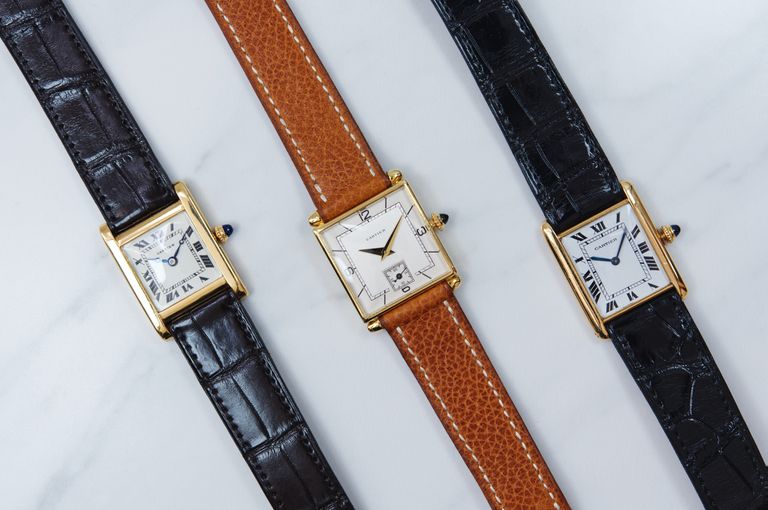
Each possesses a distinct personality yet shares that unmistakable DNA – Roman numerals, blued steel hands, guilloché or mother-of-pearl dials, and an effortless blend of masculine strength and feminine grace.
This versatility explains Cartier's remarkably broad appeal. Serious collectors prize the historical significance and design purity of vintage Santos and Tank models. Watch enthusiasts appreciate the inventive shapes and the brand's occasional forays into complications. Women have long been drawn to Cartier's smaller, more delicate interpretations, which often blur the line between timepiece and jewellery.
Meanwhile, casual luxury buyers are attracted by the immediate recognisability and understated glamour of the Maison – a Cartier on the wrist signals refined taste without needing explanation.
Few brands manage to speak so fluently to such diverse audiences.
In an industry often dominated by technical arms races, Cartier reminds us that watches can be objects of desire, worn as much for their beauty and cultural resonance as for their ability to tell time.
The Maison continues to evolve while honouring its jeweller's soul, ensuring that its creations remain as relevant on red carpets and in boardrooms today as they were in the salons of early 20th-century Paris.
Within Cartier's extraordinary history, however, certain watches have come to represent something more. Designs that have transcended their moment to become cultural objects in their own right.
In our next Cartier Journal, we turn our attention to three of them: the Tank, the Cintrée and the Crash.